Feature reference

Eco Emo Tracker in detail

A complete walk-through of what the platform and the smartphone application can do. Use the contents to jump to a section, or return to the features overview.

Web platform capability

The smartphone application displays the surveys on the participant's phone. The web application gives the researcher everything needed to run a study:

  • define a project and the smartphone surveys within that project;
  • manage study participants;
  • assign surveys to smartphones and participants;
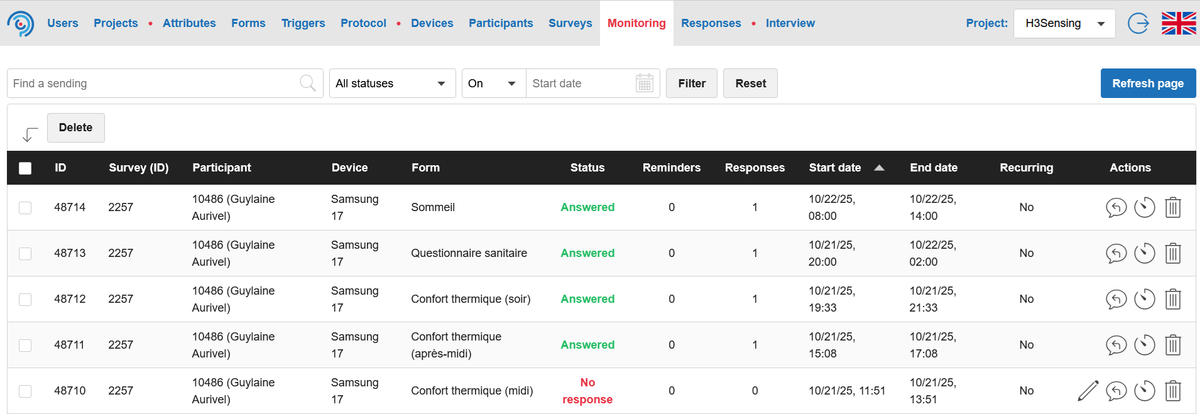
  • monitor which surveys were answered or not, from a dashboard;
  • export the survey data to standard data formats.
Participants & subgroups

Participants are described by attributes that let you segment them into groups. It is possible to assign different smartphone surveys — or different versions of the same survey — to distinct subgroups of participants (for example, males and females), and to make individual questions appear only when a participant matches given conditions.

Monitoring dashboard

 From the monitoring dashboard you follow each planned survey through its lifecycle — scheduled, sent, received, opened, reminded, and answered — so you can see at a glance which participants have responded and which still need a reminder. 

Web questionnaires

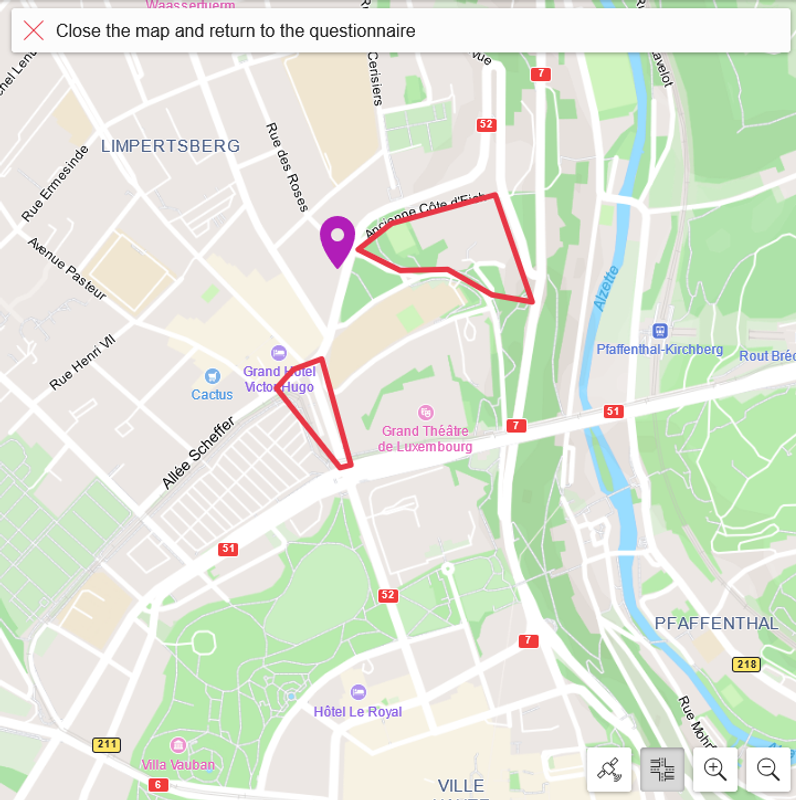
In addition to smartphone surveys, Eco Emo Tracker can be used to administer web surveys. Unlike smartphone surveys — which have to be filled at a specific time and are available only for a short period — web questionnaires can be initiated at one time and completed at a later stage. Within these web questionnaires we have incorporated a web mapping interface: participants can answer survey questions by geolocating a point on a map, or by drawing a specific polyline (a route) or a polygon (an area). Participants can look for a specific location within a database of points of interest and indicate that they visited it.

Scripted study protocols

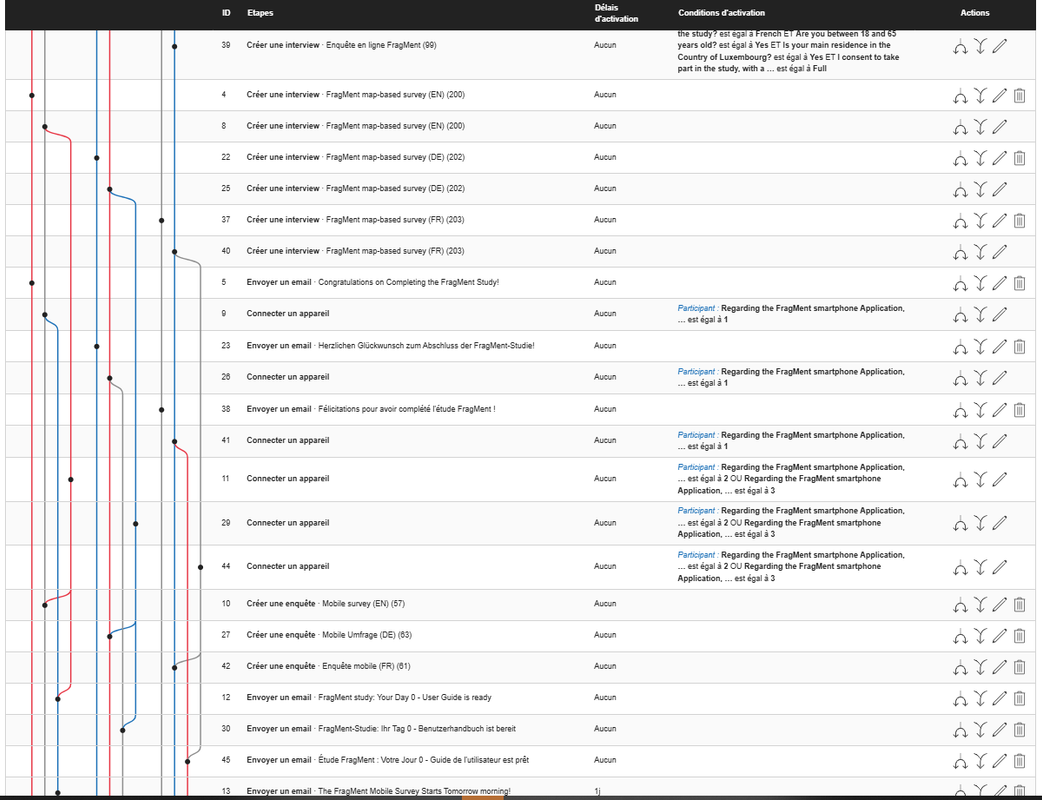
A dedicated functionality lets you customise "study protocols" as a scripted succession of web and smartphone questionnaires that can be automatically applied to a large pool of participants. Such scripted protocols can also be applied in the context of multilingual studies (example selected from a study conducted by LISER in Luxembourg). 

Data export

Survey responses are exported to standard data formats, ready for direct use in your statistical software. Exports can be produced in a fully denormalised "unified" file or as separate files per form, and are accompanied by a codebook describing the questions, conditions, and answer options. Collected GPS data is exported alongside the responses.

Android & iOS

The Eco Emo Tracker application is available with all of its functionalities both for Android phones and iOS devices (such as iPhones). Participants simply install the published app and connect it to the platform with the credentials provided by the Eco Emo tracker team.

Customizable look

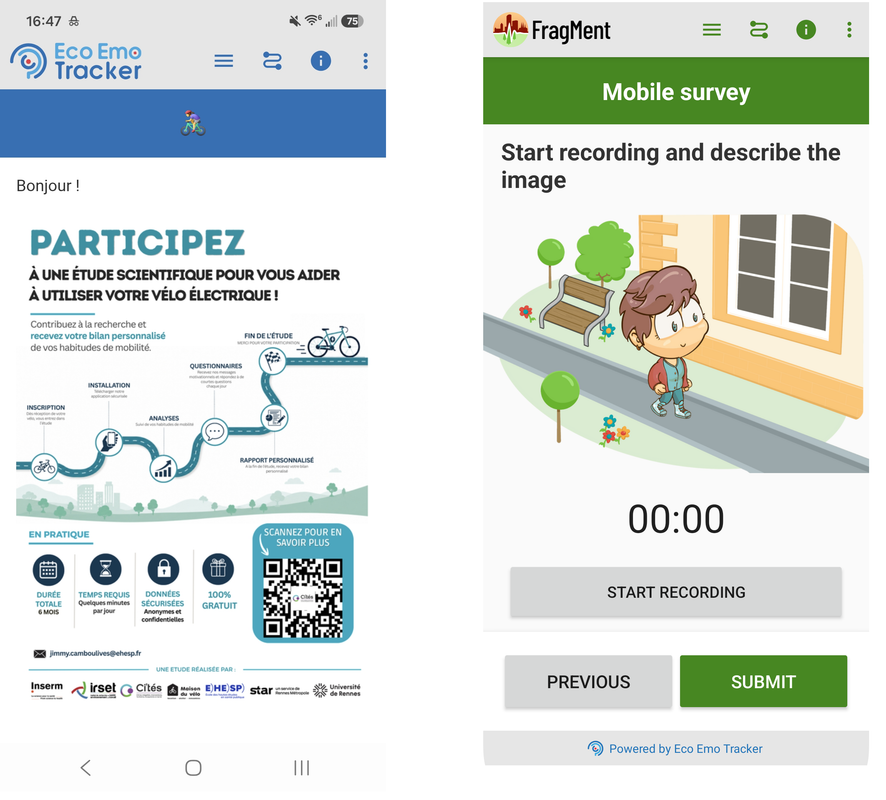
Studies can rely on the standard look of the Eco Emo Tracker application (on the left, example from a study from EHESP in Rennes, France), or alternatively on a customised look — for example with a specific logo for the study and a specific colour. The application can also be delivered as a fully white-labelled app, published on the app stores under its own name and identity. For example, the FRAGMENT project — a European Research Council study led at LISER (Luxembourg) on how daily environments and activities contribute to stress — runs its own branded version of the app, published as a separate app on Google Play. 

Survey response options

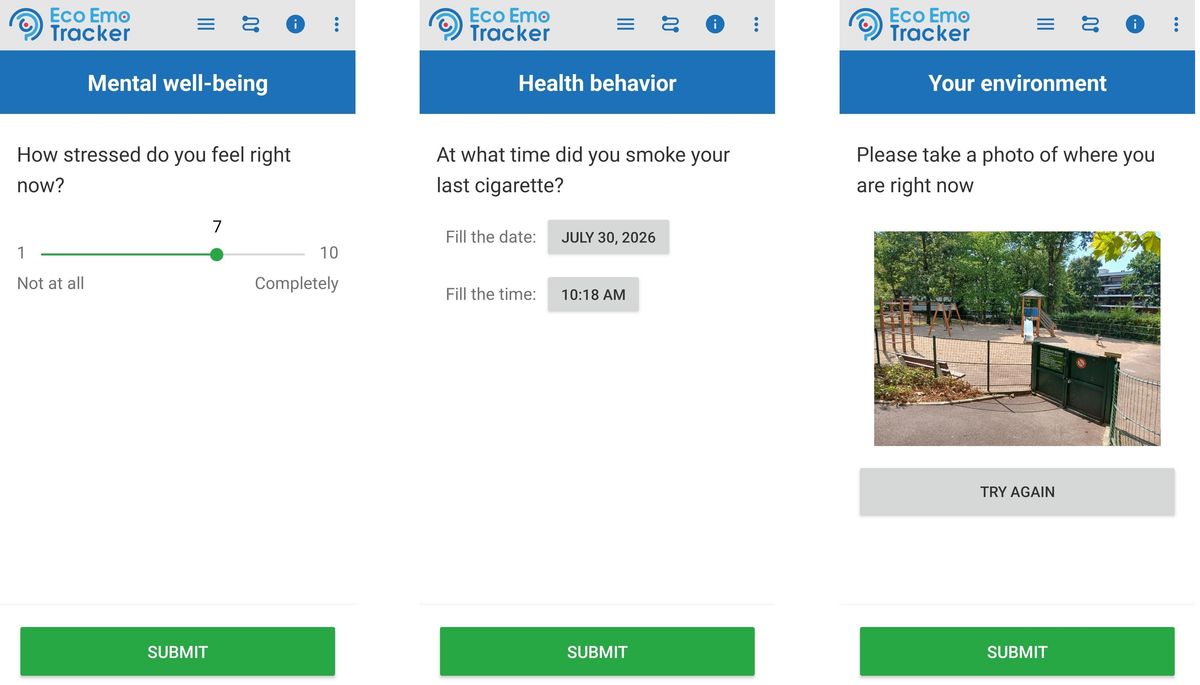
Researchers can specify survey questions with a wide variety of response modes:

  • a checkbox group, where more than one option can be selected;
  • radio buttons, with mutually exclusive selection values;
  • a numerical value or free text;
  • a slider scale;
  • time, date, or date-and-time;
  • duration;
  • audio recording, including in a rich audio format;
  • taking a photo with the smartphone.

Of note, an illustrative image can be included in the question prompt. 

Survey triggers

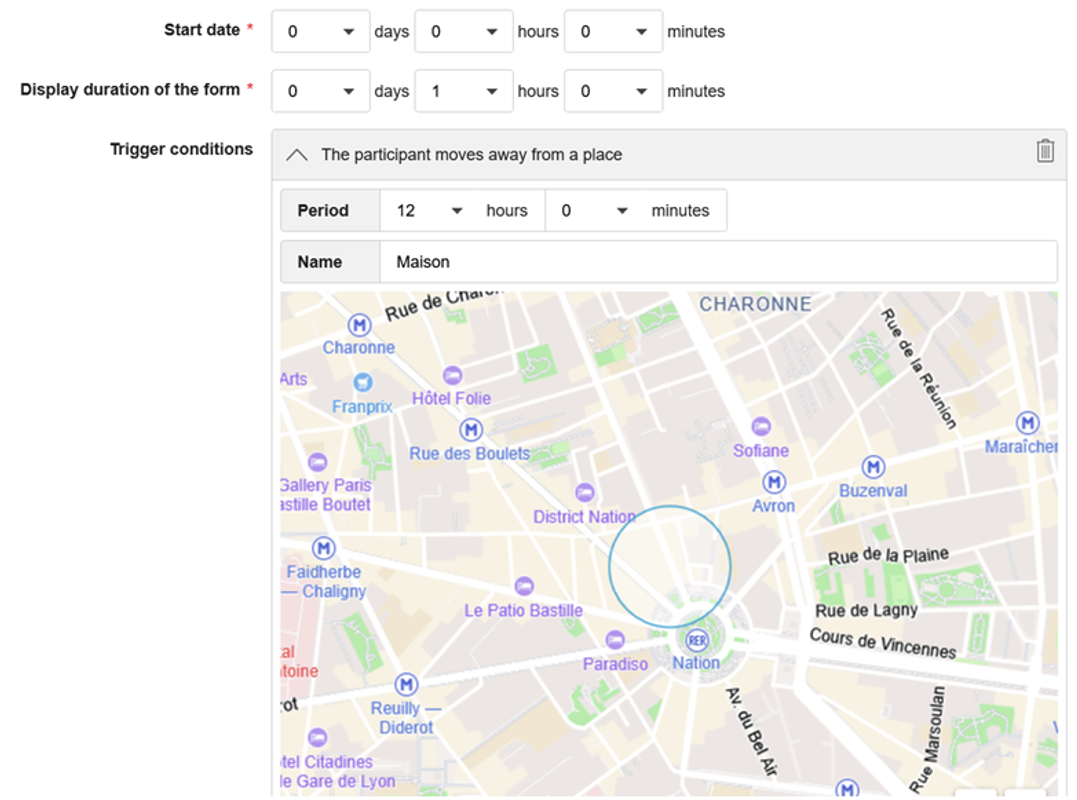
Questionnaires can be permanently available within the application — allowing participants to initiate a report themselves, for example of alcohol or food consumption (participant-initiated triggers) — or they can be automatically generated by the application. Based on the available triggers, questionnaires can be sent:

  • at a fixed time;
  • at a random time within a time slot;
  • when the participant is detected to be outdoor or indoor, based on the smartphone GPS signal (used, for example, to ask about the perceived environment exactly when participants are outdoor);
  • when the participant arrives at or leaves a specific location or a predefined geographic area — questionnaires based on geofencing.

Mobility tracking

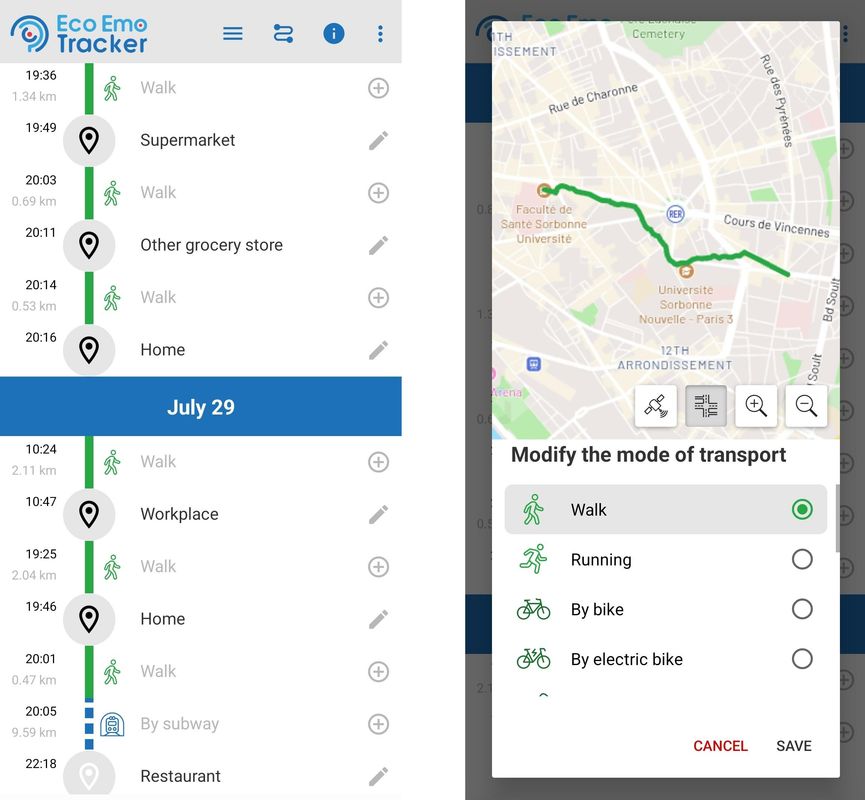
 Eco Emo Tracker can collect GPS data every few seconds over the whole survey period. It also collects the usual related activity information, such as the distinction between walking, being in a vehicle, or being stationary.On top of this, an algorithm developed by the team automatically recognises the places that were visited and the travels that were made between them. Visited places and travels are shown in a dedicated smartphone interface, where participants can provide information for each visited place and each travel. 

Languages

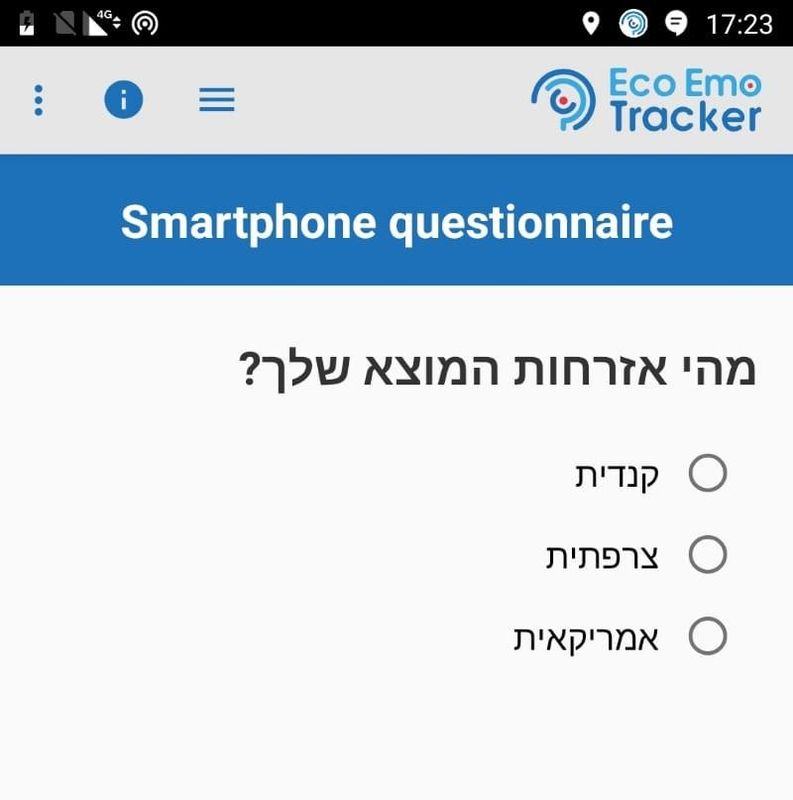
Eco Emo Tracker is already available in a number of languages, including Hebrew, which is written from right to left (example from a study conducted by the Hebrew University in Jerusalem). The smartphone and web questionnaire interfaces are translated into English, French, German, Hebrew, Dutch, Norwegian, and Portuguese, and additional languages can be added on request. 

Timed responses

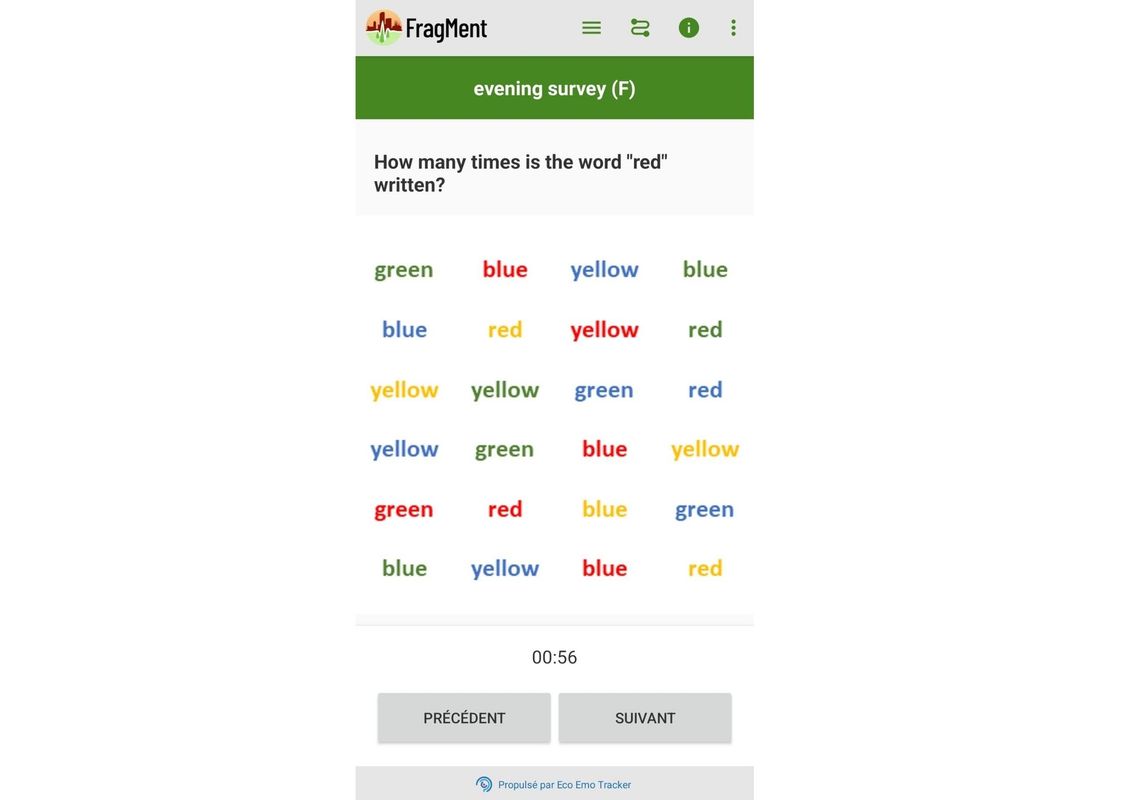
Participants can be constrained to answer within a limited time — which is useful, for example, to administer cognitive tests on the smartphone, as in the example shown here from the FRAGMENT project conducted by LISER in Luxembourg (see the timer at the bottom of the smartphone screen). This time constraint can be applied across the different question types.